
Best Coming of Age Novels About Struggle: Why Heartbreak Farm Belongs on That List
Most coming of age stories give their protagonist a problem to solve. A bully, a first love, a defining choice that separates who they were from who they are becoming. The struggle is real but contained, framed within a life that is fundamentally intact underneath it.
Dick does not have that luxury.
By the time he walks up the lane to Joe and Gwen’s farm, he has already lost more than most coming of age protagonists lose across an entire novel. His mother is dead. His father is in prison. He has been evicted, lived in a squat for a week and spent weeks walking the streets of Teddington being turned away from every job he tried for because he had no address to give. He is a teenager. He has not done anything to deserve any of it.
What Patrick Budden does with that material is not what most writers would do. He does not build a story around Dick’s suffering. He builds one around what Dick does next, the quiet, determined, completely unglamorous work of getting up at four thirty and proving himself one morning at a time. The farm does not fix Dick. It gives him somewhere to put the part of himself that still works, and that turns out to be most of him.
For readers who want coming of age fiction that earns its emotional weight through specific, honest detail rather than manufactured drama, Dick’s story is exactly that.
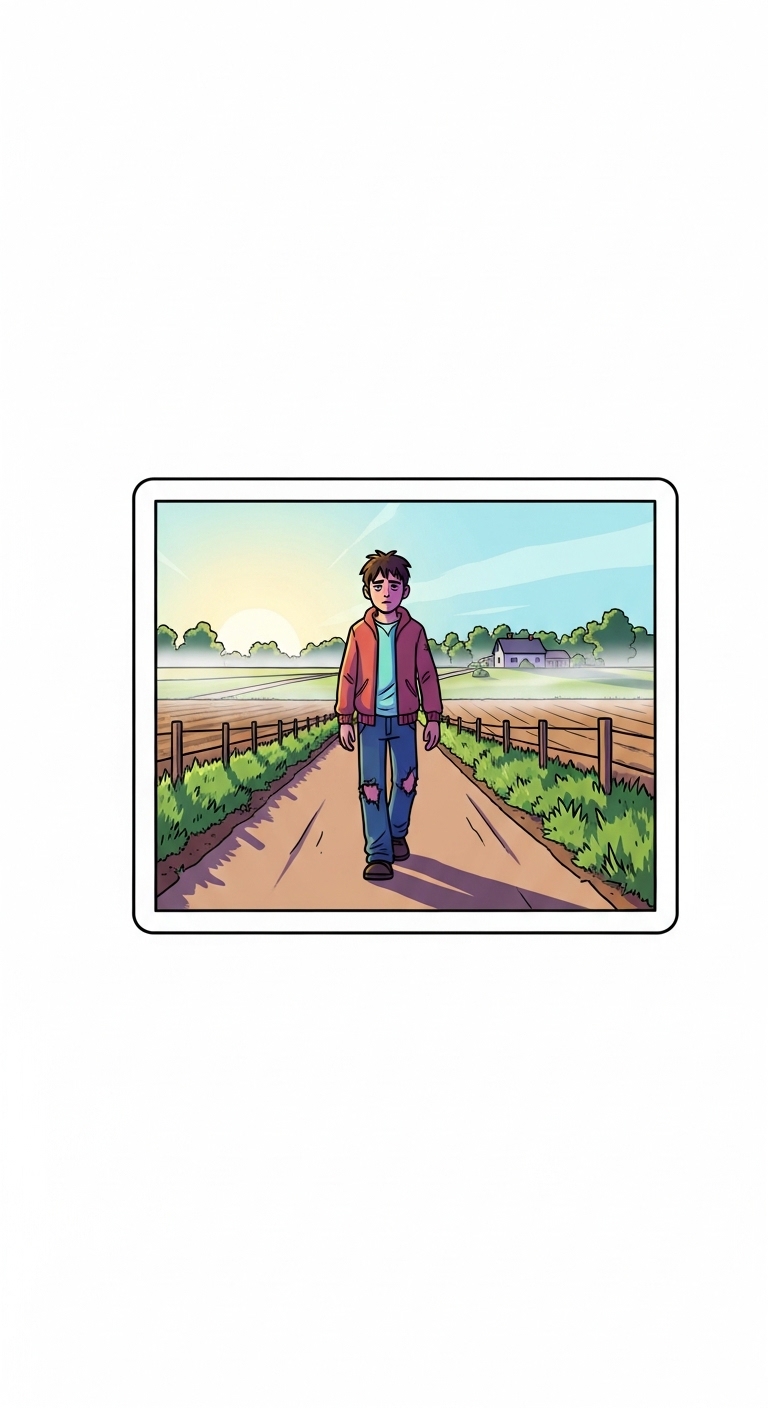
Teenage Struggle and Identity: Who Dick Is Before the Farm and After
Identity for most teenagers is assembled gradually, from school and friendships and family and the slow accumulation of experience. Dick had that process interrupted at its foundation.
When his mother died, the person who knew him best was gone. When his father disappeared into drinking and then into prison, the last structure holding Dick’s life in shape collapsed. He was not given the opportunity to become someone gradually. He had to decide, quickly and under pressure, whether he was going to become the people in the squat or someone else entirely.
He chose someone else. That choice is the spine of Heartbreak Farm.
On the farm, Dick builds an identity from the ground up, and Patrick Budden shows it happening in the smallest possible increments. The morning he gets up before Joe calls him. The day he works out how to drive the tractor from watching rather than being shown. The moment he starts answering Joe’s questions about what needs doing next rather than waiting to be told.
These are not dramatic moments. They do not announce themselves as turning points. But they accumulate into a portrait of a boy becoming a particular kind of man, reliable, observant, quietly proud of work done well, and by the time that portrait is complete, the reader understands exactly who Dick is and exactly why the ending costs what it costs.
Coming of age in Heartbreak Farm is not a journey from confusion to clarity. It is a journey from nothing to something. That is a harder journey and a more honest one.
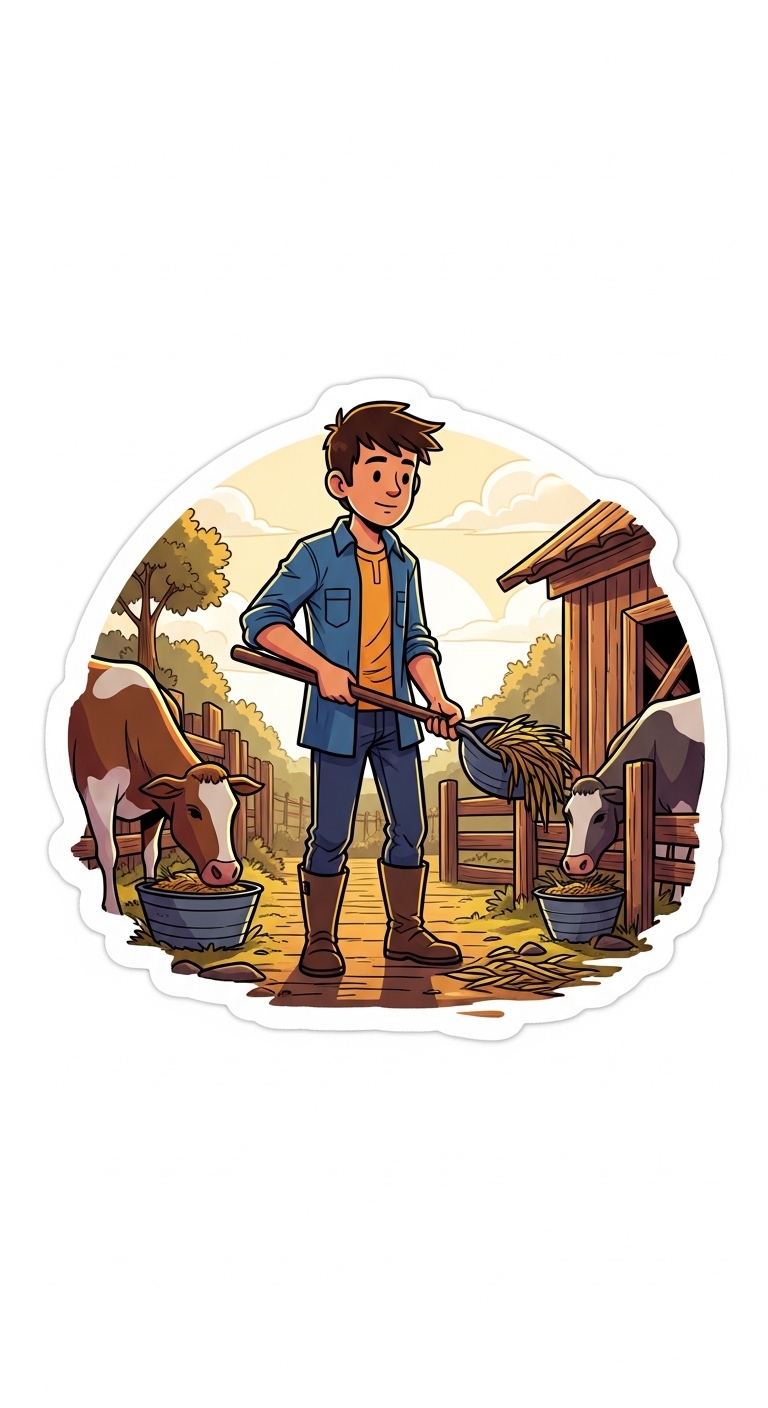
The Education Dick Never Got in School
Dick was expelled before he finished his education. The details of why are not dwelt upon, Budden gives you the fact and moves on, the same way Dick did. What matters more is the education that replaces it.
Joe is not a patient teacher in the conventional sense. He does not sit Dick down and explain things at length. He shows him once, expects him to remember and moves on to the next task. That suits Dick entirely. He is a watcher by nature, a skill he developed young, in a household where watching carefully was how you knew when things were about to go wrong, and he applies it to the farm with the same intensity.
Within days he knows the routine without being walked through it. Within weeks he is anticipating what needs doing before Joe mentions it. He learns which bullocks to handle carefully and which can be moved firmly. He learns how Jess communicates without being told what to look for. He learns the tractor, the electric fence, the market auction, the combine harvester schedule, the slurry tank, all of it absorbed with the focus of someone who has finally found something worth paying attention to.
There is a particular kind of intelligence that formal education does not measure and frequently does not reward. Dick has it in abundance. Joe recognises it immediately, not with praise, which is not his style, but with increased responsibility, which is better.
For teenagers who have been written off by systems that only value one kind of capability, Dick’s story is a specific and deliberate corrective.
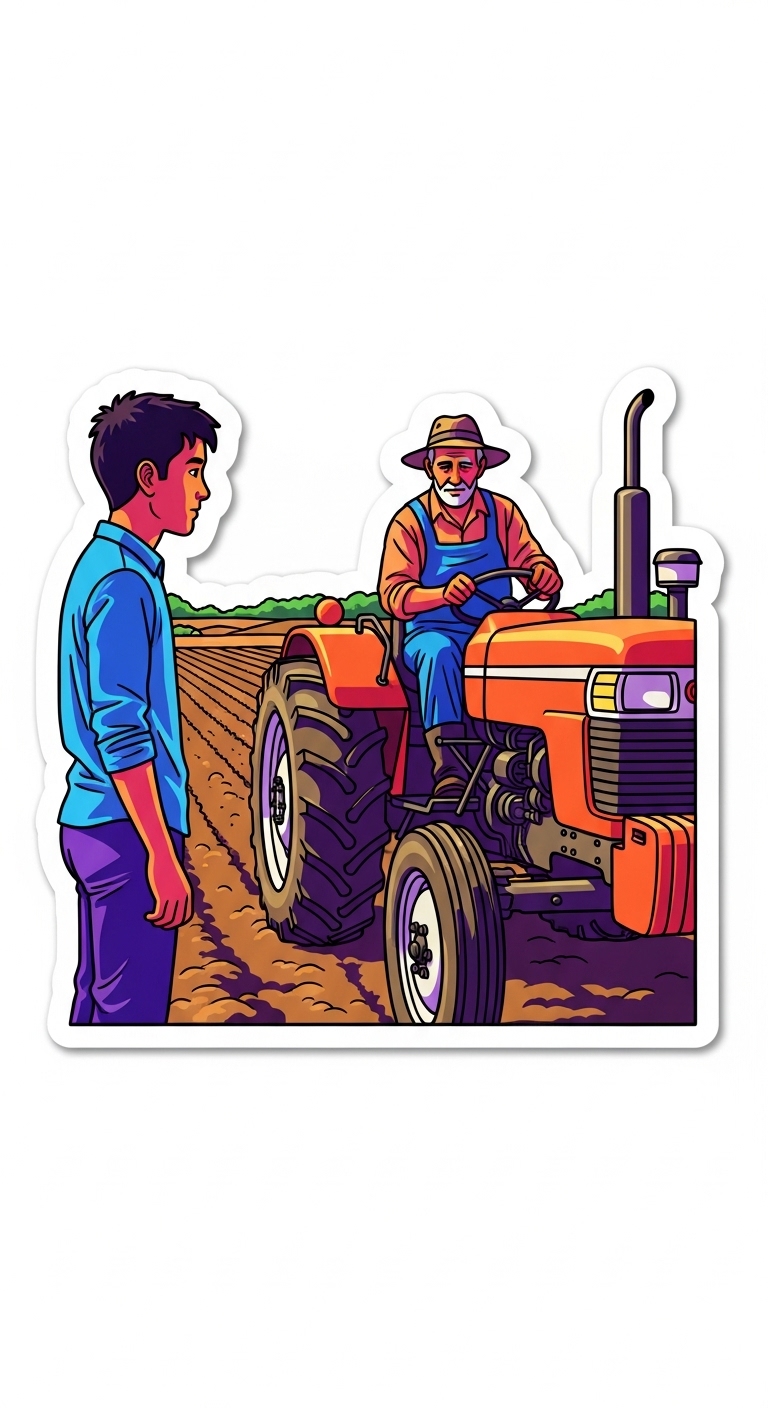
What Joe Gives Dick That Nobody Else Did
Joe’s first instinct when Dick turns up is suspicion. He says so directly, the boy could be anybody, here to rob them blind, making up a story because Gwen was home alone. He is not wrong to think it. He has simply been around long enough to know that strangers at the gate are not always what they say they are.
But he gives Dick the chance anyway because Gwen asked him to, and because Jess was settled, and because the story had the texture of something true. He offers bed and board, no pay, no promises. Prove yourself first.
What Joe does not offer, and what Dick gets regardless, is a model. A man who gets up before dawn because the work needs doing and that is that. Who fixes things rather than replacing them. Who made more money than his neighbours not through luck but through paying closer attention than they did. Who shakes hands on a deal and means it. Who does not say much but means what he says.
Dick absorbs all of it. He does not do this consciously, he is not trying to become Joe, but by the time the farm belongs to him, he is running it the way Joe ran it, making the same decisions Joe would have made, in the same order, for the same reasons.
That is what a good adult can do for a young person who has been failed by the adults who were supposed to show up. Not rescue them. Not fix what was broken. Just be consistently, reliably present, and let the young person decide what to do with that.
Joe was present. For Dick, that was everything.
The Ending and What It Says About Teenage Struggle
Dick had the farm. He had the money, the will rewritten in his name, Josh and Anne to help run it. He had sorted every piece of paperwork, funeral plan, letters to the police, letters to the paramedics, a complete folder of farm information so that whoever came after him would not be lost. He was eighteen years old and he had arranged his own death with the same methodical care he brought to every other task Joe taught him.
That detail, the care, the thoroughness, the consideration for everyone who would have to deal with the aftermath, is the most heartbreaking thing in the novel. Dick did not do this impulsively. He did it the way Joe would have done it. He made sure everything was in order before he left.
His letter says it plainly: everyone I get close to dies. He did not want that to happen to Josh and Anne. He thought removing himself was the kindest thing he could do for them.
That is not the logic of someone who has given up. It is the logic of someone who learned, too early and too thoroughly, that his presence costs the people around him something they cannot afford to lose. His father’s collapse after his mother’s death. Joe’s heart. Gwen’s inability to stay without Joe. Dick had connected those dots and drawn the wrong conclusion from them, the conclusion of a boy who was never given enough evidence that his presence was an addition rather than a risk.
Patrick Budden does not editorialise this. He lets it stand. The reader supplies the grief.
Buy Now on Amazon
Dick arrived at the farm with nothing and built something worth having, a skill, a place, a purpose, a version of himself that Joe and Gwen would have recognised as their own.
Heartbreak Farm by Patrick Budden is available now on Amazon. A coming of age novel about teenage struggle, unlikely belonging and the particular damage of growing up without anyone to catch you, written by a 78-year-old debut author who understands, without flinching, what that costs.

The Farm Is Still Running. Dick Made Sure of It.
If you read fiction for the feeling of being somewhere completely real, a place with its own smell and its own cold and its own dog that runs ahead without being told, Heartbreak Farm will put you on that farm and keep you there.
If you are drawn to stories about ordinary decency, people who take in a stranger not because it is easy but because Jess seemed settled and Gwen trusted her instincts, this novel is full of it.
If you want a book that does not manage your emotions for you, that does not tell you how to feel about what it shows you, that simply sets things in front of you and trusts you to understand their weight, Patrick Budden writes exactly that way.
And if you have ever lost someone who held everything together, and felt the particular disorientation of a world that keeps going when the person who made it make sense no longer does, this book will find you where you are.
Heartbreak Farm is a short novel. It does not waste a word. Some readers will finish it in an afternoon and sit with it for weeks. It is that kind of book, the kind you press into someone’s hands without much explanation, because any explanation would get in the way.
quote by Patrick budden
“Don’t think I didn’t like you two as much as I did Joe and Gwen, but I didn’t want to get too close, because everyone I do get close to dies. I want you two to live a very long and happy life. Forgive me for putting you through all this, but I can’t stay any longer.
Good luck, God bless you both. All my love, Dick.
Please take care of Jess.”